
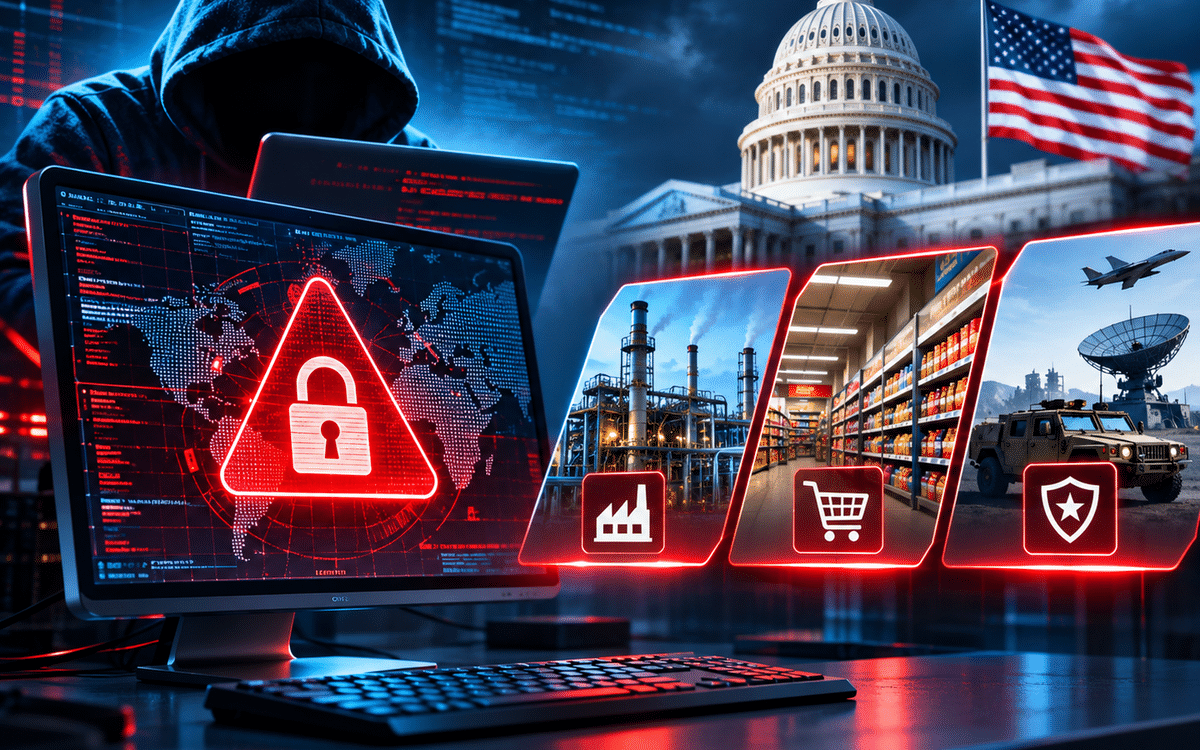
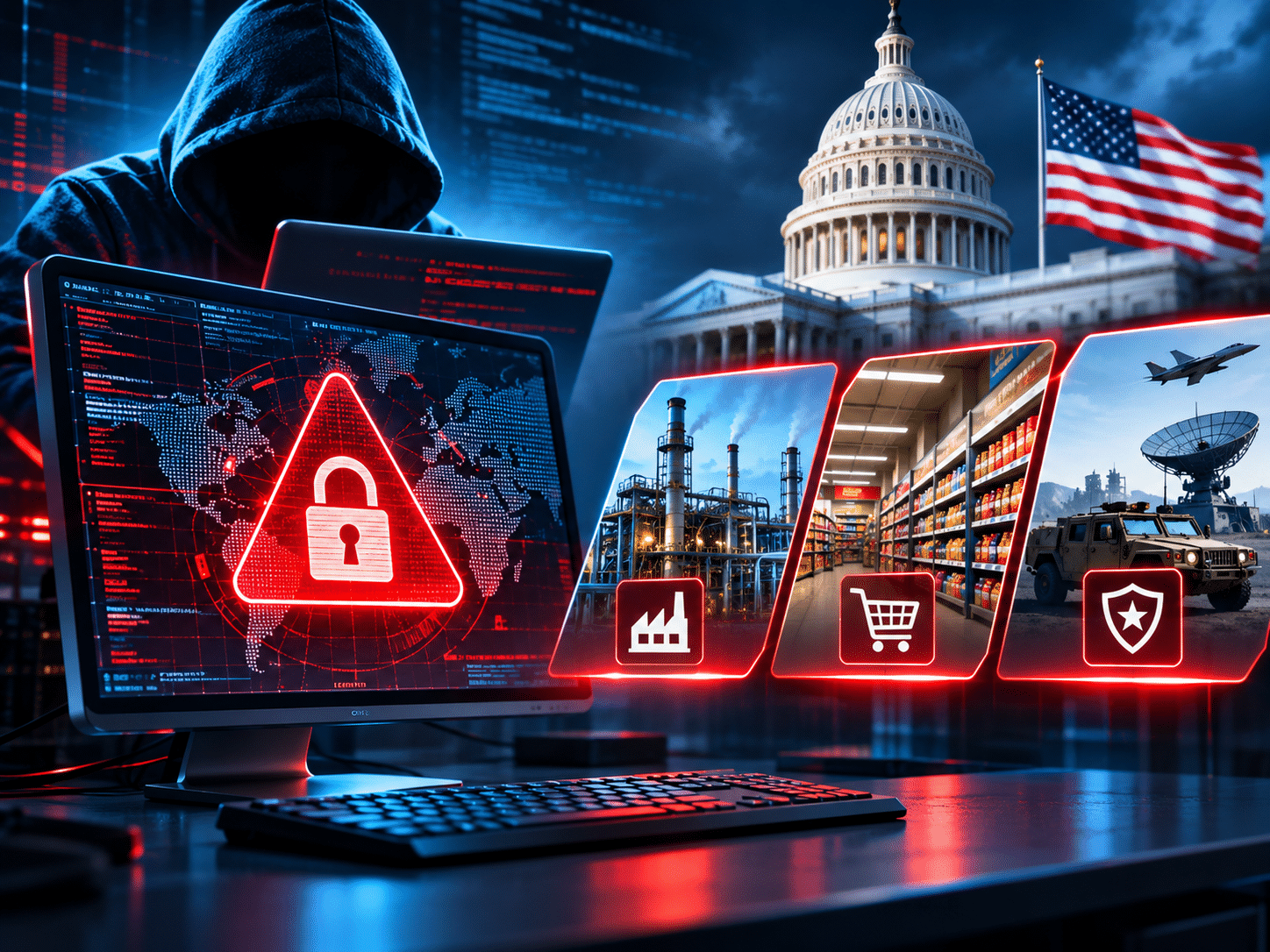
The US government has issued a major cybersecurity warning following a series of attacks targeting industrial refrigeration equipment, supermarket freezers and cold-storage systems across several countries.
Unlike conventional cyberattacks that steal information or encrypt business files, these incidents have involved attempts to manipulate the physical equipment responsible for keeping food, medical supplies and other temperature-sensitive products safe.
Hackers have reportedly gained access to internet-connected refrigeration controllers, changed temperature settings and activated defrost functions. In some cases, the resulting disruption has damaged stock and interrupted business operations.
On 5 November 2026, the US Cybersecurity and Infrastructure Security Agency (CISA), the Federal Bureau of Investigation (FBI) and other federal departments warned of an ongoing cyber threat to industrial refrigeration and cold-chain monitoring systems.
The warning followed reported incidents involving European supermarkets, refrigerated storage facilities and suspected attacks affecting US military freezer equipment. Reuters+1
For UK businesses, the situation highlights an important security problem: equipment that appears to be a routine part of building operations can become a target when its digital controls are accessible from the internet.
What Is the Ongoing Cyber Threat?
The ongoing cyber threat involves malicious actors targeting electronic temperature controllers and refrigeration management systems used in commercial and industrial environments.
These systems are designed to regulate temperatures, manage defrost cycles and monitor equipment performance.
Many modern refrigeration installations support remote access so that operators and maintenance providers can adjust settings without visiting a site.
Although remote management offers operational benefits, it can also create security weaknesses if devices are exposed directly to the internet, use weak passwords or rely on outdated software.
According to the US government warning, attackers may be able to exploit these weaknesses to interfere with cooling operations.
Possible consequences include food spoilage, inventory losses, equipment damage and potentially dangerous operating conditions.
The warning is especially significant because refrigeration equipment is used across several critical industries, including food distribution, healthcare, agriculture and transportation.
What Did the US Government Warn About?
The joint warning issued on 5 November involved CISA, the FBI and the US Departments of Agriculture, Health and Human Services, and Transportation.
The agencies warned that malicious actors were targeting vulnerable refrigeration controllers and cold-chain monitoring equipment.
Their guidance urged operators to address unnecessary internet exposure, strengthen access controls, install available security updates and replace unsupported equipment where appropriate.
The agencies also highlighted the danger of attackers forcing refrigeration units into repeated heating or defrost cycles.
Such interference can prevent equipment from maintaining safe temperatures and may create additional mechanical or electrical risks. BleepingComputer
Why Are Government Agencies Concerned?
Refrigeration systems support activities that are essential to public health and economic stability.
A supermarket depends on reliable refrigeration to protect perishable products.
A hospital or medical distribution facility may depend on controlled temperatures to preserve sensitive supplies.
Food manufacturers, warehouses and transport providers rely on cold-storage systems to maintain product quality throughout the supply chain.
A successful attack on these systems could therefore cause more than an inconvenience.
It could disrupt deliveries, destroy valuable inventory, create safety concerns and interrupt essential services.
What Happened in the Recent Refrigeration Cyberattacks?
The US warning followed a series of reported incidents across Europe and investigations involving US military facilities.
European Supermarkets Experience Freezer Disruption
During October and early November 2026, supermarkets and other food businesses across Europe reported incidents involving remotely altered refrigeration settings.
Associated Press reported that businesses in several countries, including Sweden, Belgium, Luxembourg, Ireland, Italy and Estonia, experienced problems.
In one Swedish supermarket, refrigeration equipment was reportedly set to 50°C.
A butcher in Athens also reported an extreme temperature setting on a refrigeration unit, although staff regained control before the stored meat was affected.
These incidents demonstrated how interference with digital controls can create immediate physical consequences. AP News
French Retailers Face Widespread Attacks
French supermarkets were among the businesses affected by earlier waves of attacks.
Reporting indicated that hundreds of retail locations experienced problems involving compromised refrigeration equipment.
Investigators identified vulnerable or outdated remote-management systems among the affected installations.
The disruption reportedly caused substantial food losses, although the precise financial impact varied between reports.
For retailers, the consequences extended beyond repairing equipment.
Businesses also faced stock disposal, operational disruption and the challenge of restoring confidence in their cold-storage systems.
French Blood Storage Facilities Targeted
The attacks were not limited to food retailers.
On 3 November, the French Blood Establishment confirmed a cybersecurity incident affecting refrigeration equipment supplied by a service provider.
The incident altered temperature or defrost settings at facilities used to store blood products.
The reported intervention was stopped before blood stocks were compromised.
This case is particularly important because it illustrates the potential implications for healthcare and medical supply chains. BleepingComputer
US Military Freezer Incidents Under Investigation
US military facilities have also experienced suspicious refrigeration problems.
Reports indicate that the Pentagon has been investigating freezer malfunctions at military commissaries during August 2026.
Several bases reportedly experienced unusual defrost activity or temperature changes that resulted in spoiled food.
However, the investigation should not be treated as definitive proof that every malfunction was caused by the same attackers responsible for the European incidents.
Investigators have been examining whether the events were connected to malicious cyber activity. TechRadar
Which Industries Are Most Exposed?
Industrial refrigeration and temperature monitoring systems are used across a much wider range of businesses than supermarkets.
Retail and Supermarkets
Grocery retailers operate refrigerated cabinets, freezer rooms and temperature monitoring systems across multiple locations.
A single compromised management platform could potentially affect several connected devices, depending on the installation.
Retailers may face product losses, temporary closures and additional operational costs.
Food Manufacturing and Processing
Food producers depend on temperature controls during storage, processing and distribution.
Interference can affect product safety and quality.
Businesses may need to isolate affected stock and determine whether storage conditions remained within acceptable limits.
Cold-Storage Warehouses
Cold-storage operators often manage substantial quantities of temperature-sensitive inventory.
Remote monitoring is particularly useful in these environments, but the security of the management systems becomes critical.
Healthcare and Pharmaceutical Distribution
Hospitals, laboratories, blood banks and pharmaceutical distributors may use specialised temperature-controlled equipment.
A refrigeration failure can require urgent assessment of stored materials and their continued suitability for use.
Transportation and Logistics
Cold-chain logistics providers rely on refrigerated vehicles, storage hubs and monitoring systems.
Disruption at one stage can affect deliveries further along the supply chain.
Military and Government Facilities
Government and defence facilities may depend on refrigeration for food supplies, medical products and other operational requirements.
The reported US military incidents demonstrate why these systems should be considered within broader infrastructure risk assessments.
How Do Hackers Compromise Industrial Refrigeration Systems?
Many refrigeration cyberattacks exploit weaknesses that are already familiar to cybersecurity professionals.
The equipment may be specialised, but the underlying problems often involve ordinary access controls and software maintenance.
1. Internet-Exposed Controllers
Some refrigeration controllers are connected directly to the public internet.
This allows authorised technicians to access equipment remotely.
However, it may also allow unauthorised parties to discover and attempt to access those systems.
If the controller lacks adequate protection, an attacker may be able to change settings or interfere with operations.
2. Default or Weak Passwords
Equipment is sometimes installed with manufacturer-supplied credentials.
If these passwords are not changed, attackers may be able to exploit widely known or easily guessed login details.
Weak authentication can turn a useful remote-management feature into a serious security weakness.
3. Outdated Firmware
Industrial equipment often remains in service for many years.
A controller may continue operating reliably even after its manufacturer has stopped providing security updates.
This creates a problem when vulnerabilities are discovered but no supported fix is available.
Investigations into the European incidents identified older refrigeration management products among the affected systems.
4. Known Software Vulnerabilities
Some attacks may exploit weaknesses in authentication or the software that processes remote commands.
Depending on the vulnerability, an attacker could potentially bypass normal controls or modify equipment behaviour.
The US warning identified weaknesses involving internet-accessible and unpatched systems as a major concern.
5. Poor Network Separation
A business may connect operational equipment to the same network used for everyday office activities.
This can increase exposure if another part of the organisation becomes compromised.
Separating operational technology from general business networks can help limit the paths available to attackers.
6. Insecure Remote Maintenance Access
Third-party maintenance providers may require access to refrigeration systems.
If remote connections are poorly protected, they can introduce additional risks.
Businesses should understand which suppliers can access their equipment, how that access is authorised and whether it is monitored.
Why Are Cyberattacks on Freezers So Dangerous?
A compromised refrigeration system can produce consequences that are different from a typical website or email security incident.
Physical Damage to Equipment
Repeated or inappropriate operating cycles may place additional strain on refrigeration components.
In certain circumstances, interference could contribute to equipment damage or unsafe conditions.
Loss of Food Inventory
Temperature-sensitive products can become unsuitable for sale when storage conditions are not maintained.
Businesses may need to dispose of stock even after the equipment itself has been restored.
Disruption to Medical Supplies
Some medical products require controlled storage conditions.
If temperature records become unreliable, specialists may need to determine whether the products remain safe and usable.
Financial and Operational Losses
Businesses may face equipment repair costs, lost stock, interrupted trading and additional logistics expenses.
The wider consequences can continue after the immediate technical problem has been resolved.
Supply Chain Disruption
Cold-chain operations often involve several organisations.
An incident affecting a warehouse or distribution hub may delay deliveries to retailers, healthcare facilities or other customers.
Safety and Regulatory Consequences
Where temperature controls are part of a food or medical safety process, organisations may need to follow established product assessment, quarantine and reporting procedures.
Restoring the correct temperature does not necessarily make previously exposed stock safe again.
Who Is Responsible for the Attacks?
The identity of the attackers remains an important area of uncertainty.
As of 6 November 2026, the US government had not publicly established a definitive attribution for the wider campaign.
Some reporting has described suspicions involving Iranian-linked actors, but those claims should not be presented as a confirmed finding by the US government.
European authorities have also been investigating the incidents and coordinating protective measures.
The available reporting does not establish that every affected supermarket, medical facility and military installation was compromised by the same group.
The confirmed security concern is the exploitation of vulnerable refrigeration equipment, regardless of the attackers’ eventual identity. TechCrunch+1
Why the Ongoing Cyber Threat Matters to UK Businesses
The refrigeration attacks are particularly relevant to the United Kingdom because British businesses rely heavily on connected equipment for retail, food distribution, manufacturing and healthcare operations.
The incidents also show that an organisation does not need to be a major technology company to face a cybersecurity threat.
A small food retailer, independent warehouse or local manufacturer may operate internet-connected equipment without having a dedicated cybersecurity team.
UK Officials Have Highlighted Legacy Technology Risks
Following the European refrigeration incidents, UK cybersecurity officials warned about the dangers of outdated technology and weak security practices.
Associated Press reported that the UK’s National Cyber Security Centre (NCSC) had been contacting organisations with vulnerable technology exposed to the internet.
UK officials also emphasised that the attacks involved known weaknesses rather than sophisticated new techniques.
This distinction matters.
Businesses do not necessarily need to defend against an unknown technical breakthrough. Many of the reported problems involve security weaknesses that organisations can identify and address. AP News
Smaller Businesses May Have Limited Visibility
Large organisations may have specialist teams responsible for industrial control systems security.
Smaller businesses often depend on equipment installers, refrigeration contractors or external IT providers.
As a result, business owners may not know whether a refrigeration controller has internet access or whether its software is still supported.
A useful starting point is to ask the equipment supplier how remote access is configured and what security updates are available.
UK Food Safety Responsibilities Still Apply
Businesses handling food must continue meeting applicable food safety requirements.
If a refrigeration system has been compromised, the organisation should assess the affected products rather than assuming that restoring normal temperatures resolves the problem.
Relevant guidance is available from the Food Standards Agency.
Where a serious incident affects personal data, separate data protection obligations may also arise.
However, a refrigeration controller compromise does not automatically mean that personal information has been breached.
Business Continuity Planning Is Essential
A cyber incident can become an operational emergency when it affects temperature-controlled storage.
Organisations should consider how they would maintain essential services if refrigeration monitoring or remote control became unavailable.
That may involve alternative storage arrangements, manual monitoring procedures and access to qualified maintenance engineers.
How Can Businesses Protect Refrigeration Systems Against Cyberattacks?
The US warning provides a useful reminder that connected industrial equipment requires ongoing security management.
The following measures can help organisations reduce their exposure.
Remove Unnecessary Internet Access
Industrial refrigeration controllers should not be directly accessible from the public internet unless there is a clearly justified operational requirement and suitable protection.
Businesses should work with qualified IT and operational technology specialists to identify exposed devices.
Where remote access is necessary, it should be provided through an appropriately secured and monitored connection.
Do not disconnect equipment without considering its safety and operational requirements.
Replace Default Passwords
Every controller and remote-management account should use appropriate authentication.
Default credentials should be changed during installation.
Where supported, use strong, unique passwords and multifactor authentication for remote administration.
Shared maintenance accounts should be avoided where individual access can be provided.
Apply Security Updates
Check whether manufacturers have released firmware or software updates.
Updates should be tested and installed according to the equipment’s operational requirements.
For industrial systems, an unplanned update can sometimes interrupt service, so coordination with the manufacturer or maintenance provider is important.
Identify Unsupported Equipment
Older refrigeration controllers may no longer receive security fixes.
If a device cannot be updated, the business should assess whether it can be isolated, protected through additional controls or replaced.
Unsupported equipment should not be assumed safe simply because it continues to function.
Separate Operational and Business Networks
Refrigeration equipment should be appropriately separated from general office systems.
Network segmentation can help reduce exposure and limit the consequences of a compromise.
The design should be reviewed by professionals familiar with the equipment and its operational requirements.
Monitor Temperature Changes Independently
Businesses should consider whether their monitoring arrangements can detect abnormal temperatures or unexpected changes to defrost settings.
Where the consequences justify it, independent monitoring can provide additional assurance if a primary controller is compromised.
Alerts should reach people who can respond promptly.
Review Supplier Access
Find out which contractors, equipment manufacturers and software providers can remotely access refrigeration systems.
Confirm how access is authorised, recorded and removed when no longer required.
Supplier access should be limited to legitimate maintenance needs.
Establish Safe Operating Limits
Where equipment supports appropriate safety restrictions, businesses should consider controls that prevent temperatures or operating cycles from moving outside acceptable boundaries.
These controls must be designed and validated by qualified engineers.
Cybersecurity settings should never override essential equipment safety mechanisms.
Train Relevant Staff
Employees responsible for facilities, maintenance and operations should understand the warning signs of unusual refrigeration behaviour.
They should know how to report unexpected temperature changes, repeated defrost cycles or unexplained remote-access activity.
Early reporting can help reduce operational harm.
What Should a Business Do If Its Refrigeration System Is Hacked?
A suspected compromise should be treated as both a cybersecurity incident and a potential equipment safety issue.
The response should prioritise people, product safety and the continued operation of essential services.
Step 1: Assess Immediate Safety
Check whether the equipment is operating outside safe parameters.
If there is a risk of fire, electrical danger or other physical harm, follow established emergency procedures.
Do not attempt unsafe repairs or override protective systems.
Step 2: Contact Qualified Technical Support
Notify the refrigeration maintenance provider and the organisation’s IT or operational technology security specialists.
Explain the unusual behaviour and any evidence of unauthorised access.
Step 3: Contain the Suspected Compromise
Qualified personnel should determine whether remote access needs to be restricted or the affected equipment isolated from external networks.
Containment must be coordinated with operational staff to avoid causing additional damage.
Step 4: Protect Temperature-Sensitive Stock
Record the available temperature history and identify potentially affected products.
Quarantine stock where necessary and follow applicable food safety, medical or product-handling procedures.
Do not return questionable stock to normal circulation without appropriate assessment.
Step 5: Preserve Evidence
Retain relevant system logs, controller settings, alerts and incident records where available.
Avoid unnecessary changes that could destroy useful evidence.
Step 6: Restore Systems Safely
Before reconnecting equipment, investigate how access may have occurred.
Address identified weaknesses, review credentials and confirm that the equipment operates correctly.
Restoration should include appropriate engineering and security checks.
Step 7: Review Reporting Obligations
Depending on the organisation and incident, notification to regulators, customers, insurers or relevant authorities may be necessary.
UK organisations can consult the NCSC’s guidance on incident management and reporting.
Not every equipment compromise creates the same legal obligations, so businesses should assess the facts of the incident.
The Role of Government Cybersecurity Agencies
The refrigeration incidents have prompted attention from several national cybersecurity and law enforcement organisations.
Cybersecurity and Infrastructure Security Agency (CISA)
CISA supports the protection of US critical infrastructure and publishes cybersecurity alerts, guidance and technical resources.
Its latest warning focuses on vulnerabilities in connected refrigeration and temperature-monitoring equipment.
Federal Bureau of Investigation (FBI)
The FBI investigates cybercrime and other threats affecting US organisations and infrastructure.
Its involvement reflects the potential seriousness of attacks against industrial equipment.
UK National Cyber Security Centre (NCSC)
The NCSC provides cybersecurity guidance and support for UK organisations.
Its resources cover topics including secure system configuration, incident response, supply chain security and operational technology.
Businesses can find official guidance at NCSC.
European Cybersecurity Authorities
European authorities, including France’s national cybersecurity agency ANSSI, have been investigating refrigeration-system compromises.
Cross-border cooperation is important because similar equipment may be deployed by businesses in multiple countries.
What Does This Mean for Critical Infrastructure Cybersecurity?
The incidents highlight a wider challenge in modern infrastructure security.
Many organisations have invested in protecting computers, cloud services and business applications.
However, connected physical equipment may receive less attention.
Industrial controllers, building management systems, refrigeration units and other operational technologies increasingly communicate through digital networks.
This creates opportunities for better monitoring and efficiency, but it also introduces additional points of exposure.
Operational Technology Needs Different Security Planning
Operational technology, commonly called OT, controls or monitors physical processes.
Unlike conventional business software, these systems may need to operate continuously and maintain strict safety conditions.
Security measures must therefore account for operational reliability.
For example, an ordinary office computer might be restarted after a software update with limited disruption.
Restarting a critical refrigeration controller at the wrong moment could affect stored products or equipment operation.
This is why OT security requires coordination between cybersecurity professionals, engineers and operational managers.
Cybersecurity Is Also a Supply Chain Issue
Businesses often rely on third parties to install and maintain industrial equipment.
A vulnerable product or insecure remote-support arrangement may expose several organisations using the same technology.
Supplier security should therefore form part of procurement and maintenance decisions.
Physical Consequences Change the Risk Assessment
A compromised website may disrupt sales or expose information.
A compromised industrial controller can affect physical processes.
That difference makes equipment safety, product quality and business continuity central parts of the cybersecurity response.
Are These Attacks Connected to Artificial Intelligence?
There is no established evidence that the reported refrigeration attacks required artificial intelligence.
UK cybersecurity officials and industry specialists have indicated that the incidents involved familiar weaknesses, including internet-exposed devices, outdated software and poor authentication.
The reported techniques did not require a new AI capability. AP News
This is an important lesson for businesses.
While emerging technologies deserve attention, organisations should not neglect established security practices.
A strong foundation of access control, software maintenance, network protection and incident preparation remains essential.
What Happens Next?
Investigations into the refrigeration attacks and their possible connections are continuing.
Authorities may identify additional affected systems, clarify the methods used or release more detailed technical guidance.
The identity and motivation of the attackers also remain subject to investigation.
For organisations that depend on refrigeration, the immediate priority is not to wait for a final attribution.
It is to understand whether their equipment is exposed and whether reasonable safeguards are in place.
Businesses should monitor official security advisories, consult their equipment suppliers and reassess unsupported or unnecessarily internet-connected controllers.
Conclusion: Why the Ongoing Cyber Threat Deserves Attention
The US government’s warning about an ongoing cyber threat to industrial refrigeration systems reveals how ordinary operational equipment can become a serious cybersecurity concern.
Recent incidents have affected European supermarkets and medical refrigeration facilities, while suspicious freezer malfunctions at US military installations remain under investigation.
The reported attacks demonstrate that cyber incidents can produce physical consequences, including spoiled food, disrupted operations and potential equipment hazards.
For UK businesses, the main lesson is practical: internet-connected refrigeration controllers and other industrial devices should be managed with the same seriousness as business-critical digital systems.
Organisations should review remote access, replace default credentials, address unsupported equipment, monitor abnormal operating conditions and prepare appropriate incident response procedures.
Protecting critical infrastructure begins with understanding which systems are connected, who can access them and what could happen if those controls are compromised.
10. FAQ Section
What is the ongoing cyber threat reported by the US government?
The US government has warned that hackers are targeting internet-connected refrigeration controllers and cold-chain monitoring systems. Attackers may exploit security weaknesses to change temperatures, activate defrost cycles and disrupt commercial refrigeration operations.
Why are hackers targeting industrial freezers?
The attackers’ precise motives have not been established. Vulnerable refrigeration equipment can be accessed remotely, and interference may cause costly inventory losses or operational disruption.
Which countries have experienced refrigeration cyberattacks?
Reported incidents have affected businesses in several European countries, including France, Sweden, Belgium, Luxembourg, Ireland, Italy and Estonia. Suspected incidents at US military facilities are also being investigated.
Were US military bases hacked?
US authorities have investigated suspicious freezer malfunctions at military facilities. The available reporting does not conclusively establish that every incident was a cyberattack or that all incidents involved the same perpetrators.
Can hackers remotely change freezer temperatures?
Yes. If a refrigeration controller is compromised and supports remote configuration, an attacker may be able to change temperature settings or defrost operations. The exact capabilities depend on the equipment and the nature of the compromise.
Are UK supermarkets at risk?
UK businesses using vulnerable internet-connected refrigeration equipment may be exposed. The level of risk depends on their specific devices, network configuration, software support and access controls.
How can businesses protect industrial refrigeration systems?
Businesses should review internet exposure, secure remote access, replace default passwords, install supported updates, separate operational networks and monitor abnormal equipment behaviour.
Who is behind the refrigeration cyberattacks?
The US government had not publicly confirmed a definitive attribution for the wider campaign as of 6 November 2026. Some reports have discussed suspected links to Iranian actors, but these remain unconfirmed allegations.

Keep Your Business’s Digital Presence Reliable
The recent refrigeration cyberattacks demonstrate why businesses need to pay attention to the reliability and maintenance of the technology they depend on.
At CRAZILS, we help UK businesses and international clients improve their digital presence through Web Design & Development, Ecommerce Solutions, Website Maintenance & Support, UI/UX Design, SEO, Digital Marketing and Business Consultancy.
Whether you need a more reliable website, a better ecommerce experience or support with your wider digital strategy, our team can help you explore practical solutions.
For industrial control system security, refrigeration equipment assessments or cybersecurity incident response, consult appropriately qualified specialists.
Contact CRAZILS to discuss your digital business requirements.
Website: https://crazils.com
Email: info@crazils.com
Phone / WhatsApp: +44 7897 053081
CRAZILS — Digital Solutions. Real Growth.