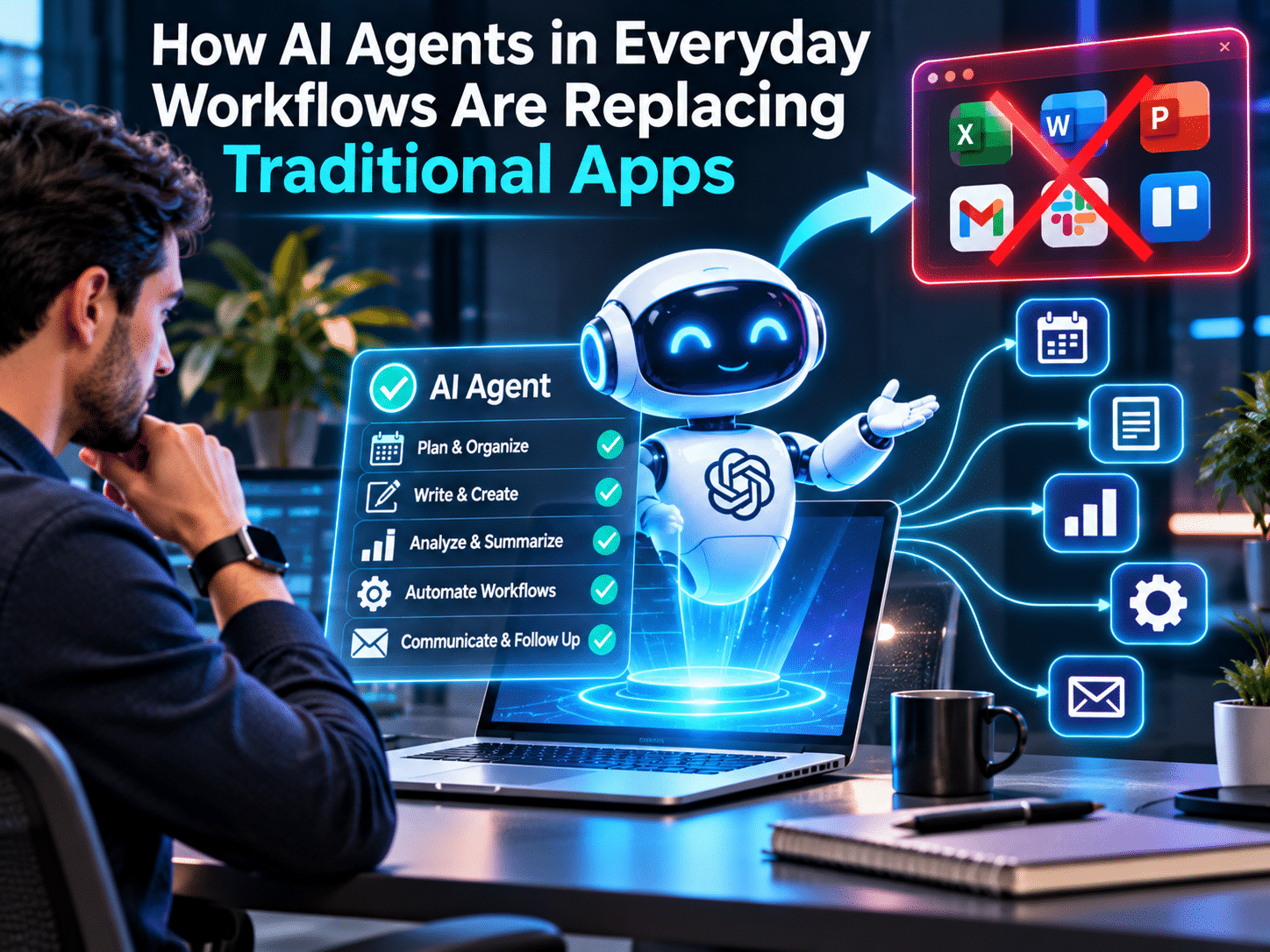



Checking several banking apps to understand where your money went can be frustrating. You might know your account balances but still struggle to identify how much you spend on groceries, subscriptions, transport or other everyday expenses.
Anthropic wants to make that process easier.
On 5 November 2026, the company announced Personal Finance in Claude, a new feature that allows eligible users to connect financial accounts and ask questions about their money in ordinary language.
Rather than manually sorting transactions or calculating spending totals, users can ask Claude to explain their financial activity, identify recurring expenses and estimate how much money may remain after upcoming bills.
The Claude Personal Finance Tool represents a significant development in AI-powered personal finance because it combines conversational artificial intelligence with information from connected financial accounts.
However, there are important limitations. Claude cannot transfer funds, make investments or manage accounts on the user’s behalf. Its access is read-only, and Anthropic warns that its financial answers can contain mistakes.
The feature is also launching initially in the United States, meaning UK consumers cannot yet assume that it is available to them.
This guide explains how Claude’s new finance feature works, what it can do, how it handles sensitive information and what it could mean for the future of personal budgeting. Claude by Anthropic+1
What Is the Claude Personal Finance Tool?
The Claude Personal Finance Tool is an AI-powered feature developed by Anthropic that lets eligible users connect financial accounts, analyse transactions, review spending patterns and ask questions about their money. It provides personalised explanations based on connected account data but cannot transfer, invest or otherwise move funds.
The feature is part of Claude and is designed to help people understand their finances without switching repeatedly between banking applications.
It uses financial information from accounts that users explicitly choose to connect.
For example, someone could ask how much they spent during the previous month or whether a recurring subscription has increased in price.
Claude can examine the available transaction information and provide a response in conversational language.
This differs from a general AI chatbot answering a question about budgeting.
With an authorised account connection, the response can be based on the user’s actual financial data rather than hypothetical figures.
Who Developed the Tool?
The feature was developed by Anthropic, the artificial intelligence company behind Claude.
Anthropic announced the launch on 5 November 2026 and described Personal Finance as an initial step towards helping people understand their financial position.
The company has also indicated an interest in exploring future collaboration with licensed financial professionals and regulated financial services firms.
That does not mean Claude currently operates as a regulated financial adviser. Claude by Anthropic
How Does Claude Personal Finance Work?
Claude Personal Finance combines three main elements: authorised account connections, financial transaction data and conversational AI.
Users begin by linking eligible financial accounts through a third-party connection service called Plaid.
Once access has been approved, Claude can read the permitted account information.
The user can then ask questions about balances, transactions, spending habits and upcoming payments.
Step 1: Connect a Financial Account
The user opens the Personal Finance section in Claude and chooses an account to connect.
The connection is handled through Plaid, a financial technology service that connects applications with financial institutions.
The user authenticates with the relevant institution and approves the requested access.
Claude does not ask the user to provide their bank password directly to the chatbot.
Step 2: Claude Reads the Authorised Information
After the connection is established, Claude can access supported financial information from the selected account.
This may include balances, transaction history, account type and credit limits.
The system does not automatically receive access to every financial account a person owns.
The user chooses which accounts to connect.
Step 3: Ask a Financial Question
Users can ask questions in everyday language.
Examples include:
- “How much did I spend on food last month?”
- “Which subscriptions am I paying for?”
- “Are my monthly expenses increasing?”
- “What payments are due before payday?”
- “Am I spending more than I earn?”
- “How much interest have I paid this year?”
Claude analyses the available information and generates a response.
Step 4: Explore the Details
A user can ask follow-up questions to investigate a particular expense.
For example, after receiving a monthly spending summary, someone could ask whether their restaurant spending has increased compared with previous months.
This conversational approach makes it possible to explore financial information without manually constructing a spreadsheet or complicated report.
Step 5: Verify Important Figures
Claude’s answers should not be treated as infallible.
Anthropic specifically advises users to examine the transactions behind important calculations and confirm significant figures with their bank.
That is particularly important before making financial commitments. Claude Help Center
Key Features of Claude’s New AI Personal Finance Tool
The feature includes several capabilities intended to make everyday money management easier.
1. Automatic Spending Categorisation
One of the most useful capabilities is the ability to organise transactions into spending categories.
Claude can group available spending information into areas such as housing, utilities, food, shopping and other expenses.
This helps users understand how their income is being used.
For example, a person might discover that food deliveries and small purchases account for a larger proportion of their monthly spending than expected.
The value lies not simply in producing totals, but in helping the user understand what those totals mean.
However, automated categories can be inaccurate. A purchase from a supermarket might include groceries, household products and other items that cannot be distinguished from the transaction description alone.
2. Monthly Spending Analysis
Claude can compare spending across different periods.
Someone who spent more than usual in October could ask which categories contributed to the increase.
The assistant may identify larger purchases, recurring charges or changes in everyday expenses.
This can make monthly budget reviews easier for people who do not regularly examine their transactions.
3. Upcoming Bill Tracking
The tool can help users understand payments that may be due before their next payday.
For example, a person could ask how much money is likely to remain after expected bills.
Claude can use the available information to estimate the position.
However, predictions depend on the transactions and payment patterns it can see.
Unexpected expenses, changes in payment dates or accounts that have not been connected may make an estimate incomplete.
4. Subscription and Recurring Payment Detection
Many people pay for streaming services, software, memberships and other subscriptions.
These charges can be easy to overlook when they appear individually affordable.
Claude can examine recurring transactions and help identify payments that deserve attention.
It may also highlight subscriptions or bills that have gradually increased.
A recurring transaction does not necessarily mean a subscription is unwanted, so users should review each item before deciding whether to cancel it.
5. Duplicate Charge Identification
Claude can look for transactions that appear to have been charged more than once.
For example, two payments of the same amount to the same merchant on the same day may deserve investigation.
However, duplicate-looking transactions are not always errors.
They may represent separate purchases, pending authorisations or legitimate repeated payments.
Users should verify suspicious charges directly with their bank or card provider.
6. Unexpected Fee Detection
The assistant can help identify charges that may be easy to miss.
These could include account fees, service charges or other deductions.
The tool may be particularly useful when a person manages several financial accounts.
Nevertheless, identifying an unexpected fee does not establish that the charge is unlawful or incorrect.
7. Income and Expense Comparison
Claude can help answer whether someone appears to be spending more than they receive.
This can provide an accessible starting point for reviewing a household budget.
The accuracy of the comparison depends on the accounts and transactions available.
For example, transfers between someone’s own accounts should not automatically be counted as income or expenditure.
Irregular earnings and cash transactions can also complicate the picture.
8. Financial Term Explanations
Financial terminology can be confusing for people who are new to budgeting or credit products.
Claude can explain terms such as annual percentage rate, commonly called APR.
It can also use relevant account information to help illustrate the cost of borrowing.
This educational function may be useful, but explanations should not replace the official terms of a financial product.
9. Custom Financial Visualisations
Anthropic says Claude can generate spending visualisations, payment calendars and personalised financial dashboards within the product.
Users can request different views of their financial information and refine them through follow-up questions.
These are capabilities of Claude itself; users do not need to create separate reports manually. Claude by Anthropic
Real-World Examples of AI Spending Analysis
The most practical way to understand Claude Personal Finance is to consider the questions people might ask about everyday money management.
Example 1: Understanding Where Your Salary Went
Imagine a person who receives £2,500 after tax each month.
They know their rent and regular bills, but they are unsure why their remaining balance is lower than expected.
If an equivalent feature becomes available for supported UK accounts, they could ask Claude to review their monthly spending.
The assistant might organise transactions into housing, food, transport, shopping and other categories.
The user could then ask which expenses increased compared with the previous month.
This is an illustrative example, not a claim about current UK availability or a tested Claude result.
Example 2: Preparing for Payday
Suppose someone has £750 remaining in their current account and expects to be paid in 12 days.
They have several regular payments due before then.
An AI budgeting assistant could help identify those payments and estimate the amount remaining after they are made.
This would be useful for short-term planning.
However, it would not guarantee that the balance is sufficient. Pending card payments, cash spending and unexpected expenses may not be fully reflected.
Example 3: Reviewing Subscription Costs
A person subscribes to several streaming platforms, fitness services and software products.
They may not remember every recurring payment.
Claude could examine connected transaction history and identify regular charges.
The user could then decide which services remain useful.
The assistant cannot cancel subscriptions through its read-only financial account access.
Example 4: Investigating Unusual Spending
A user notices that their credit card balance is higher than expected.
They ask Claude to identify unusually large transactions or possible duplicate charges.
Claude may point towards transactions worth reviewing.
The user should confirm the details with the card provider before reporting an error or disputing a payment.
Example 5: Understanding Borrowing Costs
Someone with a credit card wants to understand how interest affects their finances.
Claude can explain APR and, where sufficient account information is available, help calculate interest charged over a period.
The result should be checked against official account statements.
These examples demonstrate how conversational AI can make financial information easier to interpret without giving the system control over the money itself.
How Does Claude Connect to Bank Accounts Through Plaid?
The integration with Plaid is a central part of the new feature.
Plaid provides technology that allows authorised financial applications to connect with participating financial institutions.
Instead of manually entering transaction details into Claude, eligible users can approve a connection to selected accounts.
Does Claude Receive Your Banking Password?
According to Anthropic, Claude does not ask for or receive the user’s bank password during the connection process.
Authentication takes place through Plaid’s supported connection process.
The user approves access to the relevant account information.
This is an important distinction because entering a banking password directly into a chatbot conversation is not the same as using an authorised financial account connection.
What Financial Information Can Claude Access?
Anthropic states that Personal Finance may access the following information from connected accounts:
- The financial institution’s name.
- The account’s name and type.
- The last four digits of the account number.
- Account balances.
- Credit limits, where relevant.
- Up to two years of transaction history.
This information can reveal detailed spending habits.
For example, transaction history may indicate where someone shops, which services they use and how frequently they make certain payments.
Although Claude does not receive complete banking credentials, the information it can analyse is still sensitive.
Can Claude Transfer Money?
No.
Anthropic says the Personal Finance feature has read-only access.
It cannot transfer funds, make payments, move money between accounts or invest on the user’s behalf.
This restriction reduces the risk of the assistant taking unauthorised financial actions.
However, read-only access does not eliminate privacy, accuracy or account-connection risks.
Can Users Disconnect Their Accounts?
Yes.
Anthropic says users can unlink connected financial accounts.
Once an account has been disconnected, Claude can no longer access its data through that connection.
Users should also review the provider’s privacy documentation to understand applicable data retention and deletion arrangements.
Is Claude Personal Finance Safe and Private?
Security and privacy are particularly important when an AI assistant is allowed to examine personal financial information.
Anthropic has described several safeguards, but users should understand both their purpose and their limitations.
Read-Only Permissions
The most important operational safeguard is that Claude cannot initiate financial transactions through Personal Finance.
This separates financial analysis from financial execution.
A mistaken calculation may still affect someone’s decisions, but the assistant cannot independently move funds using the feature.
Account Connections Require Approval
Users must authorise the financial accounts they want to connect.
The feature does not automatically gain access to every account associated with a person’s identity.
Financial Conversations Are Excluded from Model Training
Anthropic states that conversations within the dedicated Personal Finance hub are not used to train its models.
This is a meaningful privacy commitment.
However, it does not mean that no information is processed or retained for service delivery, security or other purposes described in the applicable terms.
Anthropic also notes that information shared with Claude outside the Personal Finance hub is governed by the relevant privacy settings.
Users should therefore avoid copying sensitive financial information into unrelated conversations without understanding the applicable controls.
No Sponsored Financial Recommendations
Anthropic says Personal Finance does not include advertising or sponsored recommendations.
It also does not offer its own credit cards, loans or savings accounts.
This may reduce certain commercial conflicts associated with financial product promotion.
However, the absence of advertisements does not guarantee that every answer will be accurate, complete or suitable for a particular user.
Why Privacy Still Matters
Financial transaction data can reveal sensitive aspects of a person’s life.
Users should consider whether the convenience of connecting accounts justifies sharing the information with additional service providers.
Before connecting an account, review the permissions, privacy notices, supported institutions and available disconnection controls.
Anthropic’s official announcement and help centre provide further information about the feature’s stated safeguards. Claude by Anthropic+1
What Are the Limitations of Claude AI Personal Finance?
Although the feature offers useful capabilities, it is not a replacement for a bank, accountant or qualified financial adviser.
AI Can Make Calculation Errors
Claude may misunderstand transactions, use incomplete information or produce incorrect calculations.
This is particularly important when someone asks whether they can afford a large purchase.
A response based on incomplete data may overestimate the money available.
Transaction Categories May Be Wrong
A merchant name does not always reveal what was purchased.
For example, a supermarket transaction could include food, clothing, household goods or other products.
Users should treat automated categorisation as a starting point rather than a perfect record.
Not Every Account May Be Connected
A person’s full financial position may include cash, savings, investments, debts or accounts that have not been linked.
If Claude cannot see those accounts, its assessment may be incomplete.
Historical Data Does Not Guarantee Future Spending
Previous transactions can help identify patterns.
However, they cannot predict every future expense.
Unexpected repairs, changes in income or new financial commitments may affect the user’s budget.
It Does Not Provide Regulated Investment Advice
Anthropic explicitly states that Personal Finance is not designed to provide investment advice.
Users should not treat its responses as personalised recommendations to buy investments, take out loans or make other significant financial decisions.
It Cannot Take Financial Actions
Read-only access means Claude cannot automatically transfer money, cancel payments or execute investment transactions.
For some users, this is a desirable security boundary.
For others, it means the assistant remains an analysis tool rather than a complete financial management service.
Is Claude Personal Finance Available in the UK?
As of 6 November 2026, Claude Personal Finance is available only through a gradual beta rollout in the United States. Anthropic has not announced a confirmed UK release date.
The initial rollout is limited to eligible subscribers on Claude’s Pro, Max and Ultra plans.
Anthropic’s help centre states that the feature is not available on Free, Team or Enterprise plans.
It is supported through Claude’s web, desktop and mobile applications for eligible users in the supported region. Claude Help Center
When Will Claude Personal Finance Launch in Britain?
No official UK launch date has been confirmed.
A wider rollout may depend on supported financial institutions, product development, regulatory considerations and other commercial decisions.
However, these are possible factors, not a confirmed explanation from Anthropic for its geographic rollout.
UK readers should rely on official announcements rather than websites claiming an unannounced release date.
Will It Work with UK Bank Accounts?
Anthropic has not confirmed general UK bank compatibility for the new Personal Finance beta.
The fact that Plaid provides financial connectivity services does not mean that every UK account is supported by this specific Claude feature.
Consumers should not assume that accounts with banks such as Barclays, HSBC, Lloyds, NatWest or Monzo can currently be connected.
Compatibility should be checked through the official product interface when the feature becomes available in the relevant region.
Can UK Users Access It with a Paid Claude Subscription?
A paid subscription alone does not override the announced US-only availability restriction.
UK customers should not subscribe solely on the assumption that Personal Finance is available in their region.
Claude Personal Finance vs Traditional Budgeting Apps
Traditional budgeting applications and conversational AI assistants can serve similar purposes, but their approaches differ.
Traditional Budgeting Applications
Dedicated budgeting apps often focus on financial organisation.
Depending on the product, they may offer spending categories, recurring payment tracking, savings goals and account aggregation.
Some also support structured budgeting methods and alerts.
Their capabilities vary significantly between providers.
Claude Personal Finance
Claude’s main distinguishing feature is conversational interaction.
Instead of navigating several screens to investigate spending, users can ask a question and refine the answer through follow-up requests.
For example, a user might begin by asking about total spending and then investigate a particular category.
This can make financial exploration feel more natural.
Which Approach Is Better?
Neither approach is automatically superior.
A dedicated budgeting app may be more suitable for someone who wants established budgeting workflows, specific financial controls or a service designed for their country.
Claude may appeal to people who prefer asking questions and receiving explanations in ordinary language.
Some users may eventually choose to combine traditional budgeting tools with AI-assisted analysis.
The most important considerations are accuracy, privacy, account compatibility, cost and the user’s financial needs.
How to Get Started with Claude Personal Finance
For users in the supported US beta, Anthropic provides a guided setup process.
The general steps are straightforward.
- Open Claude using an eligible account.
- Look for Personal Finance in the sidebar.
- Open the feature and review the available information.
- Choose a financial account to connect.
- Complete authentication through the supported Plaid connection.
- Review and approve the requested access.
- Ask an initial question about spending, balances or upcoming payments.
- Check important results against the underlying transactions and bank records.
Anthropic recommends beginning with a simple question.
Users can then ask follow-up questions to explore the information in more detail.
Because the feature is rolling out gradually, some eligible US subscribers may not see it immediately.
UK users should wait for an official announcement of regional availability rather than attempting to bypass geographic restrictions.
What Should UK Consumers Know About AI Money Management?
Although Claude Personal Finance has not launched in the UK, the broader idea of AI-assisted budgeting is relevant to British consumers.
Many UK banking and budgeting services already provide spending information, transaction categories and account notifications.
Conversational AI may eventually make those capabilities easier to explore.
However, consumers should understand the safeguards surrounding financial data.
Open Banking and Consumer Consent
The UK has an established open banking ecosystem.
Authorised services can use regulated account information services to access permitted financial information with the customer’s consent, subject to applicable requirements.
Consumers should understand which organisation is requesting access and what permissions they are granting.
Not every AI product that analyses financial information is necessarily an authorised UK open banking provider.
FCA Authorisation
The Financial Conduct Authority regulates many financial services activities in the UK.
Consumers can use the FCA’s official resources to check the status of relevant financial firms.
However, the regulatory position of a service depends on its actual activities.
A tool that provides general explanations of spending is not necessarily performing the same regulated activity as a firm providing personalised investment advice.
UK GDPR and Financial Information
Financial information may constitute personal data under UK data protection law.
Organisations processing such information must consider applicable requirements concerning transparency, security, lawful processing and individual rights.
For consumers, it is sensible to review privacy notices and understand how data is shared and retained.
Protecting Against Financial Scams
AI-related financial products can attract fraudulent impersonation attempts.
Be cautious of unofficial websites claiming to offer early access to bank-connected AI tools.
Never enter banking credentials into an unfamiliar chatbot or a website that imitates a recognised financial service.
Use official applications and trusted provider websites.
Checking Important Financial Decisions
AI tools can help explain spending and support financial education.
However, decisions about borrowing, investing, pensions and other significant commitments may require advice from appropriately qualified professionals.
UK consumers can access free general financial guidance through MoneyHelper.
Benefits of Artificial Intelligence in Personal Finance
The broader development of AI-powered personal finance tools could offer several advantages.
Easier Access to Financial Information
People may be able to ask straightforward questions without learning complicated software.
This could make basic budgeting more accessible to users who find financial applications confusing.
Better Awareness of Spending Habits
Regular analysis can help users understand recurring costs and changes in spending.
Awareness does not automatically lead to better financial decisions, but it can provide useful information.
Less Manual Administration
Automated transaction analysis may reduce the time spent reviewing statements and organising expenses.
This could be especially useful for people managing several accounts.
More Personalised Explanations
An AI assistant can explain financial concepts in relation to the user’s own available information.
For example, understanding interest charges may be easier when the explanation refers to an actual account statement.
Support for Financial Education
Conversational tools can help users learn about budgeting, debt, interest and other everyday financial topics.
They should still be used alongside trustworthy educational resources and official financial documents.
Risks and Challenges of AI-Powered Money Management
The same technology also introduces important concerns.
Privacy and Sensitive Data
Connecting accounts gives additional organisations access to financial information.
Users should understand the scope of that access before consenting.
Inaccurate Recommendations
An AI assistant may produce a confident explanation that is wrong.
Incorrect financial calculations could lead to poor decisions if users fail to verify them.
Overdependence on Automation
People may become less familiar with their own finances if they rely entirely on automated summaries.
Regularly reviewing bank statements and account activity remains valuable.
Incomplete Financial Context
A system may not know about cash spending, informal debts, future commitments or other circumstances.
Its answers can therefore appear more comprehensive than the available data supports.
Fraud and Impersonation
Criminals may imitate legitimate AI financial tools to obtain sensitive information.
Consumers should use official services and verify account connection requests carefully.
Accessibility and Digital Exclusion
AI financial tools may not be suitable for every user.
Some people may prefer traditional banking interfaces, accessible support services or direct assistance from a financial institution.
Financial technology should improve access without making established support options unnecessarily difficult to use.
The Future of AI-Powered Personal Finance
Claude’s new feature illustrates a wider movement towards financial services that can be explored through conversational interfaces.
Instead of relying exclusively on menus and transaction reports, users may increasingly ask financial questions in ordinary language.
Several developments could shape the future of this technology.
More Contextual Financial Explanations
AI systems may become better at explaining changes in spending and identifying patterns across different financial products.
The quality of those explanations will depend on accurate data and appropriate safeguards.
Stronger Integration with Financial Institutions
Anthropic has expressed interest in working alongside licensed professionals and regulated financial firms.
Such collaborations could eventually support more specialised services.
However, no particular future product or UK partnership should be assumed until officially announced.
Greater Focus on Financial Privacy
As AI applications gain access to sensitive information, users and regulators are likely to pay close attention to consent, transparency and data protection.
Clear boundaries around what an AI assistant can access and do will remain important.
More Competition Between AI Providers
Anthropic’s launch follows wider efforts by AI companies to connect assistants with useful external information and services.
Competition may encourage new features and improvements.
However, consumers should compare products based on reliability, privacy and practical value rather than brand recognition alone.
Human Oversight Will Remain Important
Even as AI becomes more capable, significant financial decisions require care.
An assistant can explain a calculation or highlight a possible issue, but it should not be treated as an unquestionable authority.
The most useful role for these systems may be helping people understand information before they decide what to do.
Conclusion: Is Claude Personal Finance a Useful Step Forward?
The Claude Personal Finance Tool introduces a conversational approach to everyday financial analysis.
By connecting selected accounts through Plaid, eligible users can ask questions about spending, balances, recurring payments, fees and other financial activity.
The ability to explore real transaction information through natural language could make personal budgeting easier for some consumers.
Anthropic has also established important boundaries: the feature is read-only, does not execute financial transactions and is not intended to provide investment advice.
Those safeguards are valuable, but they do not remove the need to verify calculations and understand how sensitive data is handled.
For UK consumers, the immediate limitation is availability. The initial beta is restricted to eligible US subscribers, and no confirmed UK launch date has been announced.
As AI-powered financial tools develop, their long-term value will depend on whether they can provide accurate, accessible and trustworthy insights while preserving meaningful user control.
Claude’s new feature may make it easier to understand where money goes, but informed financial decisions still depend on reliable information, careful verification and personal judgement.
10. FAQ Section
What is the Claude Personal Finance Tool?
Claude Personal Finance is a feature developed by Anthropic that allows eligible users to connect financial accounts and ask AI-powered questions about spending, balances, bills and transactions. It provides financial analysis through conversational responses.
Is Claude Personal Finance available in the UK?
No. As of 6 November 2026, the feature is rolling out in beta to eligible Pro, Max and Ultra subscribers in the United States. Anthropic has not announced a confirmed UK launch date.
Can Claude access my bank account?
With the user’s authorisation, Claude can access selected account information through Plaid. This may include balances, account details, credit limits and up to two years of transactions. Access is read-only.
Can Claude transfer money or make payments?
No. Anthropic states that Claude Personal Finance cannot transfer funds, make payments, manage accounts or invest money on the user’s behalf.
Is Claude Personal Finance safe?
Anthropic uses read-only access, user-authorised connections through Plaid and a policy excluding Personal Finance hub conversations from model training. However, users should still review privacy information and verify important financial calculations.
Can Claude help create a personal budget?
Claude can analyse connected transactions, identify spending patterns, review upcoming payments and help users understand their financial position. It may support budgeting decisions, but its calculations can be incomplete or incorrect.
Is Claude Personal Finance free?
No. The initial beta is available to eligible subscribers on Claude Pro, Max and Ultra plans in the United States. It is not included in the Free plan.
Does Claude provide financial or investment advice?
The feature is not designed to provide investment advice. Users should consult appropriately qualified professionals for personalised financial decisions where necessary.

Build a Stronger Digital Experience for Your Business
The launch of Claude Personal Finance shows how digital technology is changing the way people interact with information and online services.
For businesses, a successful digital experience still depends on clear design, dependable systems and an understanding of customer needs.
At CRAZILS, we help UK businesses and international clients through Web Design & Development, Ecommerce Solutions, UI/UX Design, Digital Marketing, SEO, Business Consultancy and Website Maintenance & Support.
Whether you are planning a new website, improving an ecommerce platform or reviewing your wider digital strategy, our team can help you explore practical solutions suited to your goals.
For personalised financial advice, regulated financial services or specialist financial technology compliance, consult appropriately qualified professionals.
Contact CRAZILS to discuss your digital business requirements.
Website: https://crazils.com
Email: info@crazils.com
Phone / WhatsApp: +44 7897 053081
CRAZILS — Digital Solutions. Real Growth.