

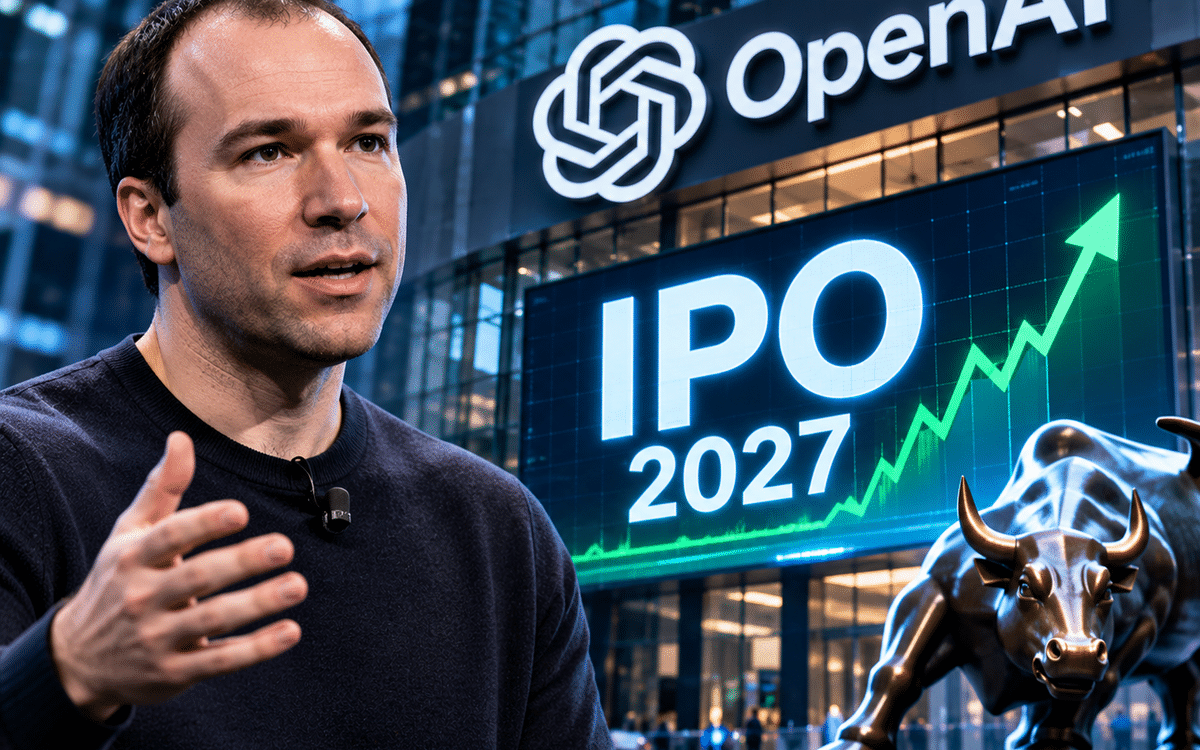
Could OpenAI become one of the biggest technology companies to enter the stock market in 2027?
The possibility has attracted attention following reports that OpenAI president and co-founder Greg Brockman believes the company could be ready for an initial public offering as early as next year.
For investors, technology professionals and business owners, the potential OpenAI IPO 2027 raises important questions about the company’s growth, financial requirements, valuation and future direction.
OpenAI is best known for ChatGPT and its work on advanced artificial intelligence. Its technology has influenced how businesses approach software development, research, customer support, content production and digital workflows.
A public listing could represent a significant moment for both the company and the wider AI industry.
However, there is an important distinction between a company becoming prepared for an IPO and actually announcing that it will go public.
An OpenAI IPO in 2027 should be treated as a possibility, not a confirmed event, unless the company formally announces its plans and publishes the relevant regulatory disclosures.
This article examines the reported statement, the factors that could influence a future listing and what UK investors and businesses should understand.
What Did Greg Brockman Say About an OpenAI IPO in 2027?
The central claim attracting attention is that Greg Brockman, OpenAI’s president and co-founder, reportedly indicated that the company could be ready for an initial public offering in 2027.
The wording matters.
Saying that a company could be IPO-ready is not equivalent to confirming that its shares will begin trading during that year.
IPO readiness can refer to several internal preparations, including financial reporting, corporate governance, compliance processes and the ability to meet public-market expectations.
A business may prepare for a possible listing without committing to a particular date.
Similarly, senior executives may discuss a company’s potential readiness while its board and shareholders continue evaluating different financing options.
The reported remarks therefore indicate a possible direction rather than a completed decision.
Reporting qualification: The precise wording, interview context and date of Brockman’s reported statement have not been independently established in the material available for this article. The headline claim should be verified against the original interview, recording or reliable published report before WordPress publication.
Has OpenAI Officially Confirmed an IPO for 2027?
A potential OpenAI IPO in 2027 is not the same as a confirmed public listing.
A formal IPO announcement would normally be supported by clear corporate disclosures and, depending on the listing route and jurisdiction, regulatory filings.
For a conventional US IPO, investors would typically expect to see a registration statement, such as Form S-1, filed with the US Securities and Exchange Commission.
Such documents provide detailed information about the company’s business, financial condition, risks, ownership and proposed securities offering.
Other important details would include the proposed exchange, share structure, underwriting arrangements and indicative pricing.
Until those details become available, several questions remain unresolved:
- Whether OpenAI will proceed with a public listing.
- Whether 2027 will be its preferred timetable.
- Which stock exchange it might choose.
- What valuation public investors would assign to the business.
- How existing ownership and governance arrangements would be reflected.
- Whether market conditions would support a major technology IPO.
Readers should be cautious of websites or social media accounts claiming to know an official OpenAI IPO price or stock ticker before those details have been announced.
Why Might OpenAI Consider Going Public?
An initial public offering allows a private company to offer shares to public investors.
For a business operating in a capital-intensive industry such as advanced artificial intelligence, a listing may offer several potential advantages.
1. Access to Additional Capital
Developing and operating advanced AI systems can require significant investment.
Costs may include computing infrastructure, data centres, research personnel, energy, networking equipment and the operation of AI products at scale.
A public offering could provide another source of capital to support future investment.
However, the amount raised would depend on the structure of the transaction and market demand.
Not every IPO primarily involves the company issuing new shares. Some offerings may also allow existing shareholders to sell part of their holdings.
2. Greater Financial Flexibility
A publicly traded company may have access to a broader investor base.
It could potentially use public equity markets for future financing, subject to market conditions and shareholder considerations.
Public shares may also provide a more readily observable market valuation.
3. Liquidity for Existing Shareholders
Private company shares are generally less liquid than shares traded on a major stock exchange.
An IPO could eventually create opportunities for eligible existing investors and employees to sell shares.
However, restrictions such as lock-up agreements may prevent some shareholders from selling immediately.
4. Increased Public Visibility
A major stock market listing can attract attention from institutional investors, financial analysts and the wider business community.
Public-company reporting may also make certain financial information more accessible.
That visibility comes with additional scrutiny and legal responsibilities.
5. Strategic Growth Opportunities
Publicly traded shares can sometimes be used in corporate acquisitions, employee compensation arrangements and other business transactions.
Whether those advantages would justify an IPO depends on OpenAI’s long-term objectives and governance arrangements.
Understanding OpenAI’s Business Model
OpenAI’s business extends beyond a single chatbot.
Its products and technology serve individuals, developers and organisations through different commercial arrangements.
Understanding these activities is important when evaluating the possibility of a future OpenAI stock market listing.
ChatGPT Subscriptions
ChatGPT provides AI-powered assistance for activities such as writing, research, analysis, programming and other tasks.
Paid subscriptions can generate recurring revenue.
However, subscription growth alone does not establish profitability.
The costs of operating advanced models and providing computationally intensive features also matter.
Business and Enterprise Services
OpenAI offers products designed for organisational use.
Businesses may pay for access to advanced capabilities, administration features and other services according to the relevant commercial terms.
Enterprise adoption could be an important consideration for future investors because organisations may integrate AI services into recurring workflows.
Nevertheless, business customers can also create demands for reliability, security, support and contractual commitments.
Developer APIs
OpenAI provides application programming interfaces that allow developers to integrate its models into software products and services.
API usage can generate revenue based on the applicable pricing model.
For investors, the important questions would include customer demand, pricing, infrastructure costs and the sustainability of usage patterns.
Technology Partnerships
Commercial partnerships can help AI companies access computing infrastructure, distribution channels and business opportunities.
They may also create dependencies or contractual obligations that investors need to understand.
A future IPO prospectus would be an important source for evaluating material partnerships and their financial implications.
OpenAI Financial Growth: What Would Investors Examine?
OpenAI’s financial performance would likely become one of the most closely examined aspects of any public listing.
Investors would want to understand whether revenue growth can support the substantial costs associated with developing and operating advanced AI.
Revenue Growth
Strong revenue growth can indicate increasing demand.
However, investors would need to distinguish recurring commercial activity from temporary or unusually concentrated demand.
They would also examine the relative contribution of subscriptions, enterprise services, developer products and other business lines.
Gross Margins
Gross margin measures the proportion of revenue remaining after the costs directly associated with delivering products or services.
For an AI company, infrastructure and computing costs can be especially important.
A business may generate substantial revenue while retaining relatively little of it after service delivery costs.
Research and Development Spending
OpenAI operates in a field where continued investment in research and model development is central to competition.
Investors would examine how much the company spends on research and whether those investments contribute to sustainable commercial advantages.
Capital Expenditure and Infrastructure Commitments
Advanced AI infrastructure may involve substantial financial commitments.
Investors would want to understand which costs are borne directly by OpenAI, which are covered by partners and what contractual obligations exist.
This distinction is important because infrastructure announcements do not necessarily represent immediate expenditure by a single company.
Cash Flow and Profitability
Revenue is not the same as profit, and profit is not the same as cash flow.
A company can report rapid commercial growth while continuing to require external funding.
Potential IPO investors would therefore examine operating cash flow, financing requirements and the path towards sustainable profitability.
Customer Concentration
If a large proportion of revenue comes from a small number of customers or partners, that can create commercial risk.
A prospectus would help investors assess material customer relationships and the durability of the company’s revenue base.
What Is OpenAI’s Valuation?
OpenAI’s valuation is one of the most closely watched questions surrounding a potential IPO.
A valuation represents an estimate of what a business is worth, but the figure depends on how it is calculated.
For private companies, widely reported valuations often come from funding transactions or secondary share sales.
These transactions can provide useful reference points, but they do not necessarily establish what the entire business would be worth in a public offering.
Private Valuation vs IPO Valuation
A private funding valuation may reflect negotiations involving a relatively small number of sophisticated investors.
A public market valuation is influenced by a much broader set of buyers and sellers.
Investors may place different values on a company depending on its financial performance, growth expectations, competition and market conditions.
Therefore, a previously reported private valuation should not be treated as the guaranteed valuation of an OpenAI public listing.
What Could Influence OpenAI’s IPO Valuation?
Several factors would likely matter.
Revenue growth: Investors would examine how quickly OpenAI is expanding its commercial activities and whether growth can be sustained.
Profitability: The relationship between revenue, infrastructure costs and operating expenses would influence expectations about future earnings.
Competition: Rival AI providers, established technology companies and open-weight models could affect pricing and customer retention.
Infrastructure requirements: Large computing and energy commitments may create substantial funding needs.
Product adoption: Commercial usage of ChatGPT, APIs and enterprise tools would help investors evaluate demand.
Governance: Investors would want to understand the company’s ownership arrangements, decision-making structure and obligations.
Market conditions: Interest rates, investor appetite for technology stocks and wider economic conditions could influence the price investors are willing to pay.
An IPO valuation would ultimately be determined through the relevant offering process and market demand.
Why Enterprise Growth Is Central to the OpenAI IPO 2027 Story
A significant development emerged from Brockman’s remarks at the Wall Street Journal technology conference in Napa, California, on 4 November 2026.
According to Reuters, Brockman said that enterprise customers now account for the majority of OpenAI’s revenue.
When asked whether the company would be ready for an IPO in 2027, he responded:
“I think so.”
Reuters
TechCrunch reported additional details from the discussion. Brockman said enterprise revenue had previously represented approximately 30% of the company’s revenue, but business sales had since become the larger contributor.
He also described approximately 70% quarter-on-quarter growth in annualised revenue during the third quarter of 2026, alongside a doubling of the enterprise business. These are executive-reported figures, not independently audited results presented in a public IPO prospectus. TechCrunch
Why Does Enterprise Revenue Matter?
Business customers can offer different commercial characteristics from individual subscriptions.
Organisations may deploy AI across multiple departments, integrate tools into recurring processes and establish longer-term supplier relationships.
This could create opportunities for more substantial and durable revenue.
However, enterprise contracts also introduce requirements around security, reliability, data handling, procurement and service support.
A company must demonstrate that it can meet these requirements consistently.
OpenAI’s Competition with Anthropic
OpenAI competes with Anthropic in several AI markets, including enterprise software and coding tools.
Brockman’s comments highlighted OpenAI’s efforts to expand its position in the enterprise market, including through its Codex coding agent.
Competition could benefit customers through improved capabilities and commercial options.
For potential investors, however, it also creates uncertainty about pricing, customer loyalty and the sustainability of market share.
Why the New Information Matters
The reported enterprise growth provides a clearer commercial explanation for why OpenAI’s leadership might be considering IPO readiness.
It suggests that the company is increasingly presenting itself not only as a popular consumer AI provider, but also as a major supplier of technology to businesses.
That development could be important to public-market investors evaluating the company’s long-term revenue potential.
What Would Need to Happen Before OpenAI Goes Public?
A potential OpenAI initial public offering would involve several major steps.
The precise process would depend on the chosen listing structure and jurisdiction.
1. Corporate and Governance Preparation
The company would need arrangements appropriate for public-market reporting and oversight.
These may include board governance, financial controls, shareholder disclosures and compliance processes.
2. Financial Reporting
Prospective investors would expect detailed financial statements and relevant explanations of the company’s performance.
For a conventional US IPO, audited financial information would generally form part of the registration process.
3. Selection of Financial Advisers
Companies typically work with investment banks, legal advisers and accounting professionals when preparing major public offerings.
These advisers help structure the transaction, prepare disclosures and assess market conditions.
4. Regulatory Filings
A US listing would ordinarily involve filings with the Securities and Exchange Commission.
The disclosures would help investors assess material risks, financial information and the proposed offering.
5. Investor Engagement
The company and its advisers may meet institutional investors to assess interest in the proposed shares.
The final pricing process would depend on demand and the transaction’s structure.
6. Stock Exchange Listing
If the offering proceeds, shares would begin trading on the selected exchange.
Only then would an official public trading price become observable.
Importantly, a company can postpone or cancel an IPO even after substantial preparation.
What Are the Potential Benefits of an OpenAI IPO?
A successful listing could have implications for OpenAI, its investors and the wider technology sector.
Access to Public Capital
An offering involving newly issued shares could raise funds for expansion and investment.
This may be especially relevant to a business with substantial infrastructure requirements.
Greater Financial Transparency
Public-market disclosure requirements could give investors more detailed information about OpenAI’s revenue, expenses, cash flow and business risks.
This would improve the ability to evaluate the company using financial evidence rather than private-market estimates.
Broader Investor Participation
A public listing could make OpenAI shares available to a wider range of eligible investors.
However, availability would depend on the exchange, investment platform and applicable restrictions.
Increased Scrutiny and Accountability
Public investors and regulators would have greater opportunities to examine financial reporting and governance arrangements.
That scrutiny may improve transparency, although public ownership does not eliminate commercial or governance risks.
A Significant Moment for the AI Industry
A major AI company’s listing could influence how investors evaluate other businesses developing AI products and infrastructure.
Its financial disclosures might also provide useful information about the economics of advanced AI services.
What Are the Risks of Investing in a Potential OpenAI IPO?
A well-known technology brand is not automatically an attractive investment at every price.
Potential investors would need to consider several risks.
High Valuation Expectations
A company can have strong growth prospects while its shares are priced too aggressively.
If the IPO valuation already assumes exceptional future performance, disappointing results could lead to substantial share-price declines.
Infrastructure and Operating Costs
Advanced AI systems can require considerable computing resources.
Investors would need to understand whether revenue growth can support the associated costs over time.
Competitive Pressure
The AI market includes specialist developers, established technology businesses and open-source or open-weight alternatives.
Competition may affect product pricing, market share and margins.
Rapid Technological Change
AI capabilities and customer preferences can change quickly.
Products that are commercially attractive today may face new competition or different technical requirements in the future.
Regulatory and Legal Risks
AI companies may face obligations relating to privacy, intellectual property, consumer protection, competition and other areas.
The legal environment can vary between countries and change over time.
Market Volatility
Newly listed shares can experience significant price fluctuations.
High demand during an offering does not guarantee that shares will maintain their initial trading price.
Governance and Shareholder Rights
Different share classes or governance arrangements can affect the influence of ordinary investors.
A future prospectus would be essential for understanding voting rights, ownership and the relationship between commercial objectives and OpenAI’s broader mission.
How Could an OpenAI IPO Affect the Artificial Intelligence Industry?
An OpenAI stock market listing could become an important reference point for the AI sector.
A New Public-Market Benchmark
Investors often compare companies using financial measures such as revenue growth, margins and cash flow.
A public OpenAI could provide additional information about the commercial performance of a major AI model developer.
This might influence how other AI companies are valued.
More Attention on AI Infrastructure
A listing could draw attention to the infrastructure required to operate advanced AI services.
Investors might examine relationships between model developers, cloud providers, semiconductor companies and data centre operators.
However, an OpenAI IPO would not guarantee gains for businesses elsewhere in the AI supply chain.
Greater Focus on Enterprise AI
Brockman’s comments suggest that business customers are becoming increasingly important to OpenAI’s commercial strategy.
That could encourage more attention on practical enterprise applications, including software development, research, customer service and business automation.
More Detailed Debate About AI Economics
Public financial reporting could help answer questions about the cost of developing and serving AI models.
These include how much infrastructure is required, whether usage is profitable and how companies balance research spending with commercial expansion.
Competition for Capital
A major offering could attract investor attention to AI.
It could also compete with other technology companies for investment capital.
The overall effect would depend on market conditions and investor appetite.
What Would an OpenAI IPO Mean for UK Investors?
UK investors may be interested in the opportunity to purchase shares if OpenAI becomes publicly traded.
However, several practical considerations are important.
Would OpenAI Shares Be Available in the UK?
If OpenAI lists on a US stock exchange, UK residents may be able to access its shares through investment platforms that support the relevant market.
Availability would depend on the platform’s services, account eligibility and any applicable restrictions.
There is currently no confirmed public listing venue or trading symbol associated with a 2027 OpenAI IPO.
Currency Exchange Risk
US-listed shares are commonly priced in US dollars.
A UK investor measuring returns in pounds sterling would therefore be exposed to movements in the GBP/USD exchange rate.
Even if a share price increases in dollars, the sterling return could be affected by exchange-rate changes.
Trading Fees and Foreign Exchange Charges
Investment platforms may charge dealing fees, currency conversion fees or other costs.
These expenses can affect returns, particularly for smaller transactions.
UK Tax Considerations
Tax treatment depends on the investor’s circumstances and the type of account used.
Potential issues may include capital gains tax, dividend taxation and the rules governing tax-advantaged investment accounts.
Not every investment is automatically eligible for every account type.
UK investors should consult current HMRC guidance or an appropriately qualified adviser where necessary.
Regulatory Protection
A company being publicly listed does not mean its share price is protected against losses.
The UK’s Financial Services Compensation Scheme, where applicable, does not generally compensate investors for ordinary market declines.
Investors should distinguish between protections concerning regulated financial services and the normal risks of owning shares.
Investment Suitability
A highly anticipated IPO can attract substantial publicity.
However, investment decisions should be based on financial circumstances, risk tolerance, diversification and the available disclosures rather than enthusiasm for a company’s products.
Can You Buy OpenAI Stock Before Its IPO?
OpenAI is not currently available as an ordinary publicly traded share through a confirmed stock exchange listing.
Certain private-market transactions may provide access to eligible institutional or sophisticated investors, subject to restrictions.
These arrangements are not equivalent to purchasing publicly listed shares through a standard retail brokerage account.
Private investments can involve limited liquidity, complex legal arrangements, valuation uncertainty and significant risks.
Beware of Fake OpenAI IPO Offers
High-profile potential listings can attract fraudulent investment promotions.
Be cautious of websites claiming to offer guaranteed OpenAI IPO allocations, exclusive discounted shares or a confirmed public ticker before an official announcement.
For UK investors, the FCA ScamSmart service provides guidance on recognising investment scams.
Investors can also check whether a financial services firm is appropriately authorised using the FCA’s official resources.
A firm’s authorisation does not guarantee that a particular investment is safe.
What Should Investors Watch Before 2027?
Several developments could help clarify whether OpenAI is moving towards a public listing.
Official Company Announcements
Statements from OpenAI and its authorised representatives would be important sources of information.
Investors should distinguish executive comments about readiness from a formal listing decision.
Regulatory Disclosures
Publicly available securities filings, if and when submitted, could provide information about the proposed offering.
Some preparatory submissions may initially be confidential, so the absence of a public filing does not necessarily reveal every stage of internal planning.
Enterprise Revenue Growth
Brockman’s reported comments make enterprise performance a particularly important area to monitor.
Future disclosures may clarify how business revenue is developing and how profitable those activities are.
Infrastructure Financing
Major financing arrangements, computing commitments and long-term contractual obligations could influence the company’s funding requirements.
Competitive Developments
Progress by Anthropic, established technology firms and other AI providers could affect OpenAI’s commercial outlook.
Market Conditions
Technology valuations, interest rates and investor demand can all influence IPO timing.
A company may be operationally prepared to list but decide that market conditions are unfavourable.
Could OpenAI Delay Its IPO Beyond 2027?
Yes.
A statement that the company could be ready in 2027 does not prevent a later listing.
Several factors could influence the timing, including financial performance, infrastructure requirements, governance arrangements, regulatory considerations and market volatility.
OpenAI might also continue raising private capital if management considers that route more suitable.
For this reason, investors should avoid treating 2027 as a guaranteed deadline.
What Does OpenAI’s Potential IPO Mean for UK Businesses?
An OpenAI IPO would primarily be a financial and corporate event.
However, the company’s increasing focus on enterprise customers could have practical implications for businesses adopting AI.
Greater Competition in Business AI
As AI providers compete for enterprise customers, businesses may gain access to new products, features and commercial arrangements.
Organisations should evaluate these offerings against real business requirements.
More Emphasis on Measurable Value
Enterprise customers generally need to justify technology expenditure.
Businesses adopting AI should examine whether a tool improves productivity, customer experience, service quality or other measurable outcomes.
Increased Importance of Supplier Evaluation
Companies integrating AI into important workflows should review supplier reliability, contractual terms, data handling and service continuity.
The financial position and long-term strategy of a technology provider can become relevant when an organisation depends heavily on its products.
Opportunities for Digital Transformation
AI can support certain business activities, but it does not replace the need for effective digital foundations.
Reliable websites, clear customer journeys, well-maintained ecommerce platforms and sound digital marketing strategies remain important.
For many smaller businesses, improving existing systems may deliver more immediate value than adopting complex technology without a defined purpose.
Future Outlook: Is OpenAI Moving Closer to a Public Listing?
Greg Brockman’s November 2026 remarks provide a meaningful indication that OpenAI’s leadership considers a 2027 IPO potentially achievable.
The reported shift towards enterprise revenue also suggests that the company’s commercial profile is changing.
These developments could strengthen the case for a future public offering.
Nevertheless, several essential questions remain unanswered.
The company has not established a confirmed IPO date, exchange, offering price or public-market valuation through the reporting examined here.
Investors also lack the detailed public financial disclosures that would ordinarily support a conventional IPO investment decision.
The next significant development would be clearer information about formal listing preparations, financial performance or regulatory filings.
Until then, the OpenAI IPO 2027 remains a credible possibility rather than a guaranteed event.
Conclusion: What Greg Brockman’s Statement Means for OpenAI’s Future
The prospect of an OpenAI IPO in 2027 has become more concrete following comments from president and co-founder Greg Brockman.
Speaking at a Wall Street Journal technology conference on 4 November 2026, Brockman indicated that he believes OpenAI could be ready to go public next year.
He also reported that enterprise customers now generate the majority of the company’s revenue, highlighting a significant development in its commercial strategy. Reuters
For potential investors, a future listing could provide greater access to OpenAI shares and more detailed information about the company’s finances.
For the wider technology industry, it could offer a new benchmark for evaluating the commercial economics of advanced artificial intelligence.
However, readiness is not confirmation.
A listing date, share price, valuation and exchange should not be considered official until supported by appropriate company announcements and regulatory disclosures.
The most important question is not simply whether OpenAI will go public in 2027, but whether its financial performance, growth prospects and eventual valuation would justify an investment.
10. FAQ Section
Is OpenAI going public in 2027?
OpenAI president Greg Brockman said on 4 November 2026 that he believes the company could be ready for an IPO in 2027. However, this does not confirm a listing date, stock exchange or offering price.
What did Greg Brockman say about OpenAI’s IPO?
At a Wall Street Journal technology conference in Napa, California, Brockman responded positively when asked whether OpenAI could be ready for an IPO in 2027. Reuters and TechCrunch reported his remarks on 4–5 November 2026. Reuters+1
Can I buy OpenAI shares in the UK?
OpenAI shares are not currently available as ordinary publicly traded shares. If OpenAI lists on a US exchange, eligible UK investors may be able to purchase them through investment platforms offering access to that market.
What is OpenAI’s IPO share price?
No official OpenAI IPO share price has been announced. Any proposed offering price would depend on the listing process, the company’s valuation and investor demand.
What is OpenAI’s valuation?
OpenAI has attracted substantial private investment, but a private funding valuation is not the same as a confirmed public-market valuation. A future IPO valuation would depend on financial disclosures, offering terms and market conditions.
Why is OpenAI considering an IPO?
A public listing could provide access to additional capital, greater liquidity for eligible shareholders and increased financial transparency. However, OpenAI has not confirmed the final structure or timing of a potential offering.
How much of OpenAI’s revenue comes from enterprise customers?
Greg Brockman said in November 2026 that enterprise customers now account for the majority of OpenAI’s revenue, compared with approximately 30% previously. These are management-reported figures rather than audited public-company results. TechCrunch
Is investing in an OpenAI IPO risky?
Yes. Potential risks include a high offering valuation, substantial infrastructure costs, competition, regulatory uncertainty and share-price volatility. Investors should examine the official prospectus and consider their financial circumstances before making decisions.

Prepare Your Business for the Next Phase of Digital Growth
OpenAI’s potential public listing highlights the growing commercial importance of artificial intelligence and digital technology.
For businesses, however, sustainable growth starts with clear objectives, dependable digital platforms and a strong online presence.
At CRAZILS, we support UK businesses and international clients through Web Design & Development, Ecommerce Solutions, Business Consultancy, UI/UX Design, SEO, Digital Marketing and Website Maintenance & Support.
Whether you are improving your website, planning an ecommerce project or reviewing your digital strategy, our team can help you explore practical solutions aligned with your business goals.
Contact CRAZILS to discuss your digital business requirements.
Website: https://crazils.com
Email: info@crazils.com
Phone / WhatsApp: +44 7897 053081
CRAZILS — Digital Solutions. Real Growth.